Plumb measures teaching, not people. Every verdict is about the doctrine in this video — never a judgment of the person who taught it, their salvation, or their character.
This reading is provided by an AI model working from a fixed confessional standard. It is held to the same rule as any other tool: check it against the Word. Plumb is not a substitute for your judgment — it's an instrument for it.
Verdict on the teaching
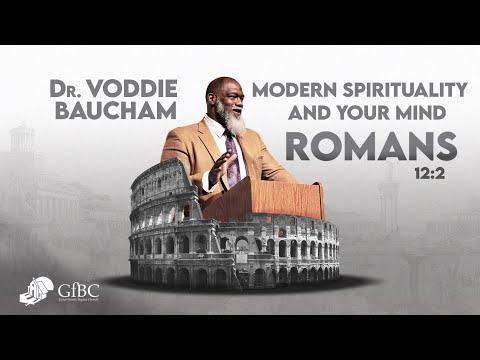
The sermon names the predominant evangelical method for discerning God's will what it is — divination — and answers it from God's sovereignty and the sufficiency of Scripture rather than a hidden blueprint.
Timestamps seek the video
I. THE COMMENDATION
The sermon you have just heard is true. Not partly true. Not true in tone with soft doctrine underneath. It is true at the level of its premises, true in its exegesis, true in its anthropology, and true in the one place where most contemporary preaching on guidance collapses — its doctrine of God.
The claim at the center of it is this: the method by which the overwhelming majority of professing Christians attempt to discover the will of God is not a Christian method at all. It is divination. It is the reading of omens. It is, as the preacher says at [5:07], "paganism, and not Christianity — that's reading tea leaves." And the reason it is paganism is not that it is emotionally excessive or intellectually lazy, though it is both. The reason it is paganism is that it attempts to obtain from God a word God has not spoken, by a means God has not appointed, for a purpose God has forbidden.
That is a serious charge. It is also correct, and I intend to demonstrate why from Scripture, from the Hebrew of Deuteronomy 29, from the Greek of Romans 12, from the Westminster Standards, from the Heidelberg Catechism, and from Calvin, Turretin, Owen, Bavinck, Warfield, and Sproul.
Here is what this sermon gets right that almost nothing else on the shelf gets right. It refuses the sentimental compromise. Nearly every evangelical treatment of "knowing God's will" begins by conceding the framework — that there exists a secret, individualized, unrevealed blueprint for your life which you are responsible to locate — and then merely argues about the best technique for locating it. Some say inner peace. Some say open doors. Some say the still small voice. Some say a combination, weighted and balanced like a portfolio. Every one of those positions has already surrendered the war in the first sentence, because every one of them assumes that God has assigned you the task of discovering what He has deliberately concealed.
This sermon does not concede the framework. It destroys it. And it destroys it on the only ground that can bear the weight: the sovereignty of God over His own secrets, and the sufficiency of the Scripture He has actually given.
Notice what the preacher does at [53:22]: "if you're afraid that you're going to make a mistake and overturn God's decretive will then you do not believe in a sovereign God." That is not a rhetorical flourish. That is a syllogism, and it is airtight. If the decree of God is immutable — and it is, because God is immutable — then no creaturely choice can frustrate it. If no creaturely choice can frustrate it, then the terror that drives the whole anxious enterprise of will-hunting is a terror with no object. The fear itself is a confession of unbelief. The man who is frantic about missing God's plan has not thought carefully about whose plan it is.
And notice what he does with the positive side. He does not leave the listener with a demolished house and no shelter. He gives five things at [12:23] and [13:25] — read your Bible, think biblically, pray biblically, seek wise counsel from people who read their Bibles and pray, and when in doubt, repeat. That is not a life hack. That is the Westminster Shorter Catechism, Question 88, on the outward and ordinary means whereby Christ communicates to us the benefits of redemption.
What I intend to add is the foundation beneath it, the exegetical spine inside it, the objections it did not have time to answer, and the Christ toward whom the whole argument bends. Because there is a reason God forbade divination in Deuteronomy 18, and the reason is not merely that divination is false. The reason is that seven verses later He promised a Prophet.
II. THE STAKES
Understand what is actually being contested here, because it is not a matter of decision-making technique.
Three things are at stake, and each one of them is load-bearing.
The first is the sufficiency of Scripture. The Confession states it with a precision that has not been improved upon in three and a half centuries: "The whole counsel of God concerning all things necessary for His own glory, man's salvation, faith and life, is either expressly set down in Scripture, or by good and necessary consequence may be deduced from Scripture: unto which nothing at any time is to be added, whether by new revelations of the Spirit, or traditions of men" (WCF 1.6). Read that clause again — nothing at any time is to be added, whether by new revelations of the Spirit. The Divines were not merely fencing out Rome's traditions. They were fencing out the enthusiast, the man who claims a private wire to heaven, the man who says God told me about matters God never addressed.
Now ask the question the enthusiast never asks: if Scripture is sufficient for faith and life, and my decision about which job to take is a matter of life, then either Scripture is sufficient to govern that decision or the Confession is wrong. There is no third option. The man who insists he needs an extra-scriptural word to make a lawful choice between two lawful options has, by that insistence, declared the Bible insufficient. He does not say it that way. He never says it that way. But that is what he has said.
The second thing at stake is the third commandment. When a man says "God told me," he is making a truth claim about divine speech. He is putting words in the mouth of the Almighty. And God has an opinion about that. "I did not send the prophets, yet they ran; I did not speak to them, yet they prophesied" (Jer 23:21, ESV). Two verses earlier: "They speak visions of their own minds, not from the mouth of the LORD" (Jer 23:16, ESV). The Hebrew is chazon libbam — a vision of their own heart. Not a lie invented in cold blood. A sincere impression, genuinely felt, and falsely attributed. Sincerity is not the standard. Origin is the standard.
The preacher touches this precisely at [1:03:45] when he describes how a testimony evolves over five years — how "there was a guy at the airport and I struck up a conversation" becomes "God said to me, you need to witness to him, I'm going to save him." That drift is not harmless embellishment. It is the manufacture of divine speech. The Larger Catechism lists among the sins forbidden in the third commandment the "misapplying" and "abusing" of God's name, and among those forbidden in the ninth, "speaking untruth" and "misconstructing intentions" (WLC 113, 145). To attribute to God a sentence He did not utter violates both at once.
The third thing at stake is the soul of the ordinary believer. And this is where the sermon lands hardest, and rightly. At [1:05:48]: "young Christian sitting in the audience listens to the first testimony and says I need to share the gospel; young Christian sitting in the audience listening to the second testimony — I need to be more spiritual so that God tells me who I need to witness to." That is the whole tragedy in two sentences. The mystical testimony does not produce obedience. It produces envy, paralysis, and a two-tier church: the spiritual elite who hear voices, and the plodders who merely read the Bible and do what it says.
And the plodders are the ones obeying God.
What is lost if this teaching is neglected? A generation of Christians who cannot make a decision without an omen, who cannot obey a clear command because they are waiting on an unclear feeling, who mistake anxiety for discernment and impression for revelation, and who will one day stand before a God who gave them sixty-six books and asked, "Why did you not read them?" The stakes are not decisional efficiency. The stakes are whether the Word of God is the Word of God.
III. THE WALKTHROUGH — WHAT WAS SAID AND WHY IT IS TRUE
Begin where he begins. At [1:03] he says this "is not just a question, this is the question of our day," and that "even in the church it is difficult to find biblical thinking" on it. That is an accurate diagnosis, and the reason it is accurate is that the church has been catechized on this subject by the culture rather than by the Confession.
Then the Margaret narrative, drawn from Bruce Waltke's Finding the Will of God: A Pagan Notion? — the missionary conference, the hurricane, the brochure, the lawyer named Marshall. And at [4:06] the crucial observation: they "would stand up before churches and tell that exact story and it would be the evidence that God called them to be where they are."
Now watch the prosecution at [5:07]: "that is paganism... that's looking at the stars and the heavens trying to discern the story that they tell; that's horoscope reading."
Is that overstated? No. It is understated, and Deuteronomy supplies the vocabulary. "There shall not be found among you anyone who burns his son or his daughter as an offering, anyone who practices divination or tells fortunes or interprets omens, or a sorcerer or a charmer or a medium or a necromancer or one who inquires of the dead" (Deut 18:10–11, ESV). The Hebrew list is precise. Qosem qesamim — one who casts lots for oracles. Me'onen — a soothsayer. And critically, menachesh — from the root nachash, meaning to read omens, to divine by observing signs. That is the exact activity. The menachesh did not cast spells. He watched circumstances and inferred divine intent. He noticed that the bird flew left. He noticed that the wine swirled a certain way in the cup — which is precisely what Joseph's steward references in Genesis 44:5, "Is it not from this that my lord drinks, and by this that he practices divination?" The verb is nachesh.
A hurricane, a brochure, and a colleague named Marshall are omens. Read as a message, they are nichush. The fact that they occur inside a Christian woman's week rather than a Babylonian priest's courtyard does not change the epistemology. The method is identical; only the vocabulary has been baptized.
And Isaiah gives the alternative in the same breath as the rebuke: "And when they say to you, 'Inquire of the mediums and the necromancers who chirp and mutter,' should not a people inquire of their God? Should they inquire of the dead on behalf of the living? To the teaching and to the testimony!" (Isa 8:19–20, ESV). To the teaching and to the testimony — letorah v'lit'udah. The answer to divination is not better divination. The answer to divination is the written Word.
At [6:11] the definition: "you must somehow tap into the Divine will, you must somehow transcend your human limitations and somehow access the mind of God." Hold that sentence. It is the most important sentence in the sermon, because it isolates the premise. The pagan project is ascent — the creature climbing toward the mind of God. The Christian reality is descent — God condescending to speak. Every false religion on earth is a technique of ascent. Christianity is the report of a descent. "Long ago, at many times and in many ways, God spoke to our fathers by the prophets, but in these last days he has spoken to us by his Son" (Heb 1:1–2, ESV).
At [7:14] he catalogues the ascent techniques: fortune-telling, transcendental meditation, pharmaceuticals, sign-reading. And at [9:16] the irony that carries the whole sermon: "the Pagan concept of finding the will of God is to circumvent the mind, turn off the mind, alter the mind, not trust the mind. The biblical way goes directly through the mind."
That is exegetically exact, and the Greek proves it. Romans 12:2: "Do not be conformed to this world, but be transformed by the renewal of your mind" — tē anakainōsei tou noos. Nous. The mind. Not the emotions, not the intuition, not the spirit conceived as a non-cognitive organ. The instrument of transformation is the intellect, renewed.
And the verbs are worth dwelling on, because they carry freight the English blurs. Mē syschēmatizesthe — do not be conformed — is built on schēma, outward figure, the shape a thing takes on. Metamorphousthe — be transformed — is built on morphē, essential form, what a thing actually is. Paul is contrasting an externally imposed mold with an internally wrought nature. The preacher captures this at [15:31] with "do not be pressed into the mold of this world." That is exactly right, and J.B. Phillips famously rendered it that way for the same reason.
Both verbs are present tense, and both are passive or middle in force — continuous, ongoing, and something done to you. You do not transform yourself by an act of will. You are transformed, progressively, by the renewing of your mind under the ministry of the Word and the Spirit. The preacher notices this at [38:04]: "the renewal of your mind, even by the tense of the verb here, is an ongoing, never-ending process." Correct. Sanctification is not a decision. It is a work.
At [18:35] he makes the observation that the word for "world" here is not kosmos but aiōn — age. Precisely. Paul is not warning against the created order; he is warning against the reigning ethos of this present evil age, the aiōn houtos, which Galatians 1:4 says Christ gave Himself to deliver us from. This matters because it locates the enemy correctly. The problem is not matter. The problem is not the body. The problem is the operating assumptions of a fallen epoch. That is why the sermon then turns, entirely legitimately, to the concrete channels through which the age does its work.
Education, at [21:38] and [22:40]. Media, at [24:44]. Film, at [25:47] — and the Ocean's Eleven illustration at [26:48] is a small masterpiece of applied ethics: "they broke the eighth commandment, but it was sweet how they did it." The point is that narrative reorders the affections below the level of argument. You do not decide to approve of the thief. You are trained to cheer, and then you discover you approve. That is syschēmatizesthe in operation.
On education, the preacher states a strong personal position — "I am an opponent of government education... I think it is absolutely unacceptable for Christian parents to send their children to the government for their education" [22:40]. The principle beneath it is unassailable and scriptural: children are to be brought up "in the discipline and instruction of the Lord" (Eph 6:4, ESV), and the covenant charge of Deuteronomy 6:7 places catechesis in the home. Fourteen thousand hours of formation is not neutral, and no such thing as neutral education exists — a point Cornelius Van Til pressed and John Frame develops in The Doctrine of the Knowledge of God. On the prudential application of that principle to particular families in particular providences, faithful Reformed men have reached different conclusions in good conscience, and the Confession is careful to guard that ground: "God alone is Lord of the conscience" (WCF 20.2). The principle binds. The application admits of wisdom.
At [27:51], psychology: "the Bible says your greatest problem is on the inside of you and your solution is on the outside of you, but psychology says your greatest problems are on the outside of you and the solution is on the inside of you." That antithesis is exactly stated, and it is the whole burden of Jeremiah 17:9 and of Jay Adams' Competent to Counsel. The human problem is cor incurvatum in se — the heart curved in upon itself — and the human solution is an alien righteousness imputed from outside. Any counseling system that locates the disease in the environment and the cure in the self has inverted both halves of the gospel simultaneously. That said, the antithesis is between interpretive systems, not between the soul and the body; the Confession's doctrine of man as body and soul in union means that the same sleeplessness may have a spiritual root, a bodily root, or both, and the faithful pastor distinguishes. Elijah under the broom tree was given food and sleep before he was given a word.
At [30:56] the turn to the affirmative command, and the indictment of evangelical anti-intellectualism: "the mind is a terrible thing." Then the little parable at [31:58] — "I was getting some head knowledge... I went to church, they gave me a shot, I'm dumb and in love with Jesus." That is funny because it is true, and it is tragic for the same reason. Machen answered it a century ago in Christianity and Liberalism, chapter two: "Christ died" is a fact; "Christ died for my sins" is doctrine; and the gospel is the doctrine. There is no such thing as loving a Christ about whom you know nothing. You cannot love a blank.
Then Ephesians 4:17–24, and at [33:00] the discussion of the heart. "Your heart's a muscle that pumps blood... when the Bible talks about your heart it is speaking figuratively about an aspect of your mind, which is the only knower, lover, feeler, yearner that you have."
The target here is the popular head/heart dichotomy — the eighteen-inch gap, the idea that knowing and loving are rival faculties. He is right to demolish it, and the Hebrew makes his case even stronger than he states it. Leb and lebab in the Old Testament are not the emotions as opposed to the intellect. The heart thinks: "every intention of the thoughts of his heart was only evil continually" (Gen 6:5, ESV). The heart knows: "you know in all your heart and soul" (Josh 23:14). The heart wills, plans, remembers, and decides. So the biblical heart is the governing center of the whole inner man — intellect, affection, and will together — and Jonathan Edwards develops precisely this in Religious Affections, where the affections are not a compartment beside the understanding but "the more vigorous and sensible exercises of the inclination and will of the soul." The point stands and stands stronger: Scripture knows nothing of a spirituality that bypasses the understanding. The dichotomy is the error, not the mind.
At [35:02] he cites 2 Timothy 3:16–17 — Scripture makes the man of God "complete, equipped for every good work" — and draws the inevitable inference at [36:02]: "So why do you need to close your Bible and turn off your mind if you're going to find the good work that God would have you to walk in? Answer: you don't. That's a lie from the pit of hell itself."
The logic is clean. The Greek artios, complete, and exērtismenos, fully equipped — a perfect passive participle, thoroughly outfitted — are exhaustive terms. Paul does not say Scripture equips you for most good works, leaving a residue requiring private oracles. He says every good work, pan ergon agathon. If Scripture equips for every good work, then either the decision before you is a good work — in which case Scripture equips you for it — or it is not a good work, in which case you should not do it.
At [37:03], Richard Baxter and the ordinary means. This is where the sermon becomes most explicitly confessional without naming the Confession. "Attend upon the word of God, which is the ordinary means." That is the Shorter Catechism, Question 88: "The outward and ordinary means whereby Christ communicateth to us the benefits of redemption are His ordinances, especially the Word, sacraments, and prayer." And it is the Canons of Dort, Head 5, Article 14: God "preserves, continues, and perfects" His work of grace "by the hearing and reading of His Word, by meditation thereon, and by the exhortations, threatenings, and promises thereof, as well as by the use of the sacraments."
At [39:05] the warning about moralistic preaching: "five ways to have a happy life, ten ways to reduce stress" — and the consequence, "I can sit under that kind of preaching and pursue works righteousness and legalism and think that I'm fine with God." Correct, and this is the indicative-imperative structure he laid down at [15:31]. Paul does not say therefore in Romans 12:1 by accident. Eleven chapters of what God has done precede one syllable of what you must do.
Then at [43:09] the exegetical core. Dokimazein — "that by testing you may discern." He traces it through Luke 12:56, Romans 1:28, and 1 Corinthians 11:28 at [44:11] and [45:12], and the semantic range he recovers is exactly right. Dokimazō is the assayer's word. It is what you do to metal: you put it in the fire, you test it, and what survives is dokimos — approved, proven genuine. It presupposes a standard external to the tester. You cannot assay gold without knowing what gold is.
Which destroys the mystical reading in a single stroke. Dokimazein is not receptivity. It is not waiting. It is not emptying. It is the active, discriminating, standard-applying labor of a trained mind. Paul is describing a workman, not a medium.
And at [46:15] and [47:16], the three New Testament texts that actually say "this is the will of God": sanctification (1 Thess 4:3), thanksgiving (1 Thess 5:18), and doing good so as to silence foolish men (1 Pet 2:15). Every one of them moral. None of them geographic. As he says — "I don't know what y'all are searching for, man, it's right there."
Then the threefold distinction at [47:16] through [49:18]: decretive, preceptive, and the will of disposition. And the Piper, Sproul, and Waltke citations at [50:19] through [51:20]. This is not innovation. This is the received Reformed dogmatics, and I will lay its historical roots in the next two sections.
Finally, the marriage application at [52:22] through [57:29], culminating in the line I would carve over the door of every Christian counseling office: "I know I married the right one because we got married." That is not resignation. That is covenant theology applied to the estate of marriage. The vow constitutes the reality. You are not searching for a pre-assigned soul; you are entering a covenant, and once entered, the question of the right one is answered by the covenant itself.
IV. THE FOUNDATION
Now go beneath the sermon and lay the floor it stands on.
Everything in this message rests on one text, and the preacher never cites it — but the whole argument is an exposition of it. "The secret things belong to the LORD our God, but the things that are revealed belong to us and to our children forever, that we may do all the words of this law" (Deut 29:29, ESV).
The Hebrew sets up a deliberate antithesis: hanistarot, the hidden things, and hanniglot, the uncovered things. Two domains, two owners. The hidden things belong — lYHWH Eloheinu, to the LORD our God. The revealed things belong to us and to our children. And the purpose clause is decisive: the revealed things are given la'asot — in order to do. Revelation is given for obedience, not for satisfaction of curiosity.
Observe what this text does. It does not merely say that some things are unknown to us. It says they belong to Another. To pry at them is not intellectual ambition; it is trespass. Sproul says it in the quotation read at [51:20]: "the quest for God's secret will is an unwarranted invasion of God's privacy." That is a property claim, and Deuteronomy 29:29 is the deed.
Beneath that lies the distinction that Reformed theology has used for four hundred years to keep the creature in his place: what Bavinck, in Reformed Dogmatics, volume one, calls the difference between theologia archetypa and theologia ectypa. Archetypal theology is God's knowledge of Himself — infinite, exhaustive, incommunicable. Ectypal theology is the knowledge God gives to creatures, accommodated to their capacity, true but not exhaustive. Every word of Scripture is ectypal. It is God stooping. Calvin uses the image of a nurse lisping to an infant (Institutes 1.13.1), and elsewhere of spectacles placed on weak eyes (Institutes 1.6.1).
Now the whole pagan project can be stated in one sentence: the attempt to obtain archetypal knowledge by creaturely technique. That is what divination is. That is what the emptied mind reaches for. That is what the omen-reader believes he has touched. And it is not merely futile — it is the original temptation. "You will be like God, knowing good and evil" (Gen 3:5, ESV). The serpent did not offer disobedience as such. He offered an epistemology: a way of knowing that bypassed the Word God had spoken. Eve had a revealed will. She wanted a hidden one.
This is why the presuppositional point matters, and here Frame and Poythress earn their keep. In The Doctrine of the Knowledge of God, Frame argues that all human knowing is covenantal — the creature knows truly only as a servant receiving the Lord's self-disclosure, never as an autonomous investigator achieving God-level perspective. Poythress, in Symphonic Theology, makes the parallel point that human perspectives are genuinely true and irreducibly limited at the same time. Neither skepticism nor omniscience. Creaturely knowledge under the Word.
Apply that and the divinatory method self-destructs. Suppose the circumstances really are a message. On what basis do you interpret them? A hurricane in the Marshall Islands might mean go there. It might mean pray for them. It might mean nothing whatsoever except that the Pacific has a storm season. The sign is mute. It cannot interpret itself. To read it, you require a key — and the key would have to come from outside the sign, which means from special revelation, which means from the Bible, which means the sign was never doing the work in the first place. Your interpretation of providence is only ever as reliable as your interpretation of Scripture, and if you are good at the latter, you do not need the former.
John Flavel understood this exactly. In The Mystery of Providence he urges believers to observe God's dealings with them and to record them — but always retrospectively, always in submission to the written Word, and never as a source of new commands. Providence is read backwards, as a comfort. It is not read forwards, as an oracle. Joseph could say "you meant it for evil, but God meant it for good" (Gen 50:20) after twenty-two years. He could not have said it in the pit.
And this is the answer to the objection that the sermon's position somehow diminishes providence. It does not diminish it; it magnifies it. The Confession is maximal here: God "doth uphold, direct, dispose, and govern all creatures, actions, and things, from the greatest even to the least, by His most wise and holy providence" (WCF 5.1). The hurricane is governed. The brochure is governed. The lawyer named Marshall is governed. Every one of them falls under the decree, and not one of them is a message to you. The Heidelberg Catechism says the same and draws the right conclusion: all things come "not by chance, but by his fatherly hand," and therefore we may be "patient in adversity, thankful in prosperity, and for what is future have good confidence in our faithful God and Father" (Heidelberg Q&A 27–28). Confidence in the Father — not deciphering of the Father.
So the system holds together like this. God has decreed all things (WCF 3.1). God has revealed what we need for faith and life (WCF 1.6). God has commanded us to obey what He revealed and to leave alone what He did not (Deut 29:29). Therefore the Christian life is not detective work. It is discipleship.
And the pagan alternative collapses at precisely the point where it thinks itself most spiritual. It claims humility — I just want to do what God wants. But it demands a knowledge God has refused to give. It claims dependence — I'm waiting on the Lord. But it uses that waiting to avoid the commands already in hand. It claims submission. It practices trespass.
V. THE DEEPENING
Now let me carry this further than the sermon had time to go, and arm you for the four objections you will meet the moment you repeat any of it.
First, the historical pedigree of the threefold distinction. What the preacher gives at [47:16] is not a modern simplification. Francis Turretin, in the Institutes of Elenctic Theology, Topic Three, Question Fifteen, lays out the classical distinction between the voluntas beneplaciti — the will of good pleasure, God's eternal and efficacious purpose — and the voluntas signi — the will of the sign, revealed in precept, prohibition, and promise. Turretin insists these are not two wills in God, which would divide the simple divine essence, but one will considered under two aspects: as it decrees, and as it prescribes. Calvin makes the same move in the Institutes, Book 3, chapter 24, and again in his treatment of predestination at 3.21.1, where he warns that "to seek any other knowledge of predestination than what the Word of God discloses is not less insane than if one should purpose to walk in a pathless waste, or to see in darkness."
A pathless waste. That is the man hunting the decree.
Second objection, and the most common: but what about the book of Acts? The Macedonian vision. Philip sent to the Ethiopian's chariot. Paul forbidden by the Spirit to speak the word in Asia. Does that not establish a pattern of direct guidance?
Answer in three parts. One: every case in Acts is unsought. Paul was not fasting for a sign about Macedonia; he was already traveling and preaching, and the vision interrupted him. Philip was not consulting circumstances; an angel spoke. Not a single episode in Acts models the technique under discussion, which is the deliberate scanning of ambiguous events for coded divine intent. Two: every case is verbally clear. "Come over to Macedonia and help us" is a sentence. It is not a brochure. The whole difficulty of the omen — that it must be interpreted — does not arise. Three: Acts is narrative, and narrative describes before it prescribes. Paul also raised a man from the dead in Troas and survived a viper on Malta. No one builds a method out of those.
Beyond that, the apostolic office was foundational, not perpetual: the church is "built on the foundation of the apostles and prophets, Christ Jesus himself being the cornerstone" (Eph 2:20, ESV). Foundations are laid once. And even the brother who holds that extraordinary gifts continue cannot get from Acts to divination, because nothing in Acts commands the seeking of signs and everything in Deuteronomy 18 forbids it.
Third objection: does not Romans 8:14 say that all who are led by the Spirit of God are sons of God?
Read the context. "For if you live according to the flesh you will die, but if by the Spirit you put to death the deeds of the body, you will live. For all who are led by the Spirit of God are sons of God" (Rom 8:13–14, ESV). The for is causal. The leading of the Spirit that Paul has in view is precisely and explicitly the mortification of sin. It is the same in Galatians: "But if you are led by the Spirit, you are not under the law" — and the immediately following verses list the works of the flesh and the fruit of the Spirit (Gal 5:18–23, ESV). Being led by the Spirit is moral, not geographical. Owen builds his entire treatise On the Mortification of Sin on that foundation, and he is right: the Spirit's leading is a leading into holiness, not into itineraries.
Fourth objection, and the one that will be thrown at you with the most emotion: what about peace? Doesn't Colossians 3:15 say to let the peace of Christ rule in your hearts?
It does, and the verb is worth having. Brabeuetō — from brabeus, the umpire at the games. Let the peace of Christ act as umpire. But umpire over what? Read the whole verse: "And let the peace of Christ rule in your hearts, to which indeed you were called in one body. And be thankful" (Col 3:15, ESV). The context from verse 12 is compassion, kindness, meekness, patience, bearing with one another, forgiving one another. The peace in view is peace in the body, the umpire that settles disputes between brothers. It is not a private buzzer that lights up when you have chosen the correct house.
And the preacher's counterexample at [11:20] is devastating and unanswerable: "Has God ever led you to confront somebody about sin? Trust me, you don't feel a peace about that." Consider Jonah. He had tremendous peace about Tarshish. He slept through a hurricane. Consider Jeremiah, who had no peace at all and was squarely in the will of God. Consider Gethsemane, where the Son of God sweat as it were great drops of blood while doing the one thing He had come into the world to do. If inner tranquility indicated divine approval, Christ was outside the will of His Father in the garden — which is blasphemous, and therefore the premise is false.
Now add a fifth thing the sermon gestured at but did not develop: the doctrine of vocation. The listener hears "God has no hidden blueprint for your job" and fears it means God is indifferent to his work. The opposite is true. Calvin, Institutes 3.10.6, teaches that "the Lord bids each one of us in all life's actions to look to his calling," and that this doctrine is a great relief — "no task will be so sordid and base, provided you obey your calling in it, that it will not shine and be reckoned very precious in God's sight." Paul says the same: "Only let each person lead the life that the Lord has assigned to him, and to which God has called him" (1 Cor 7:17, ESV). Your station is assigned by providence and sanctified by obedience. You do not need a sign to know that the accountant at First National Bank may glorify God at her desk. Colossians 3:23 already told her: "Whatever you do, work heartily, as for the Lord and not for men."
Sixth: the sermon's five-step method is, whether or not it was framed this way, a triperspectival ethic. Frame, in The Doctrine of the Christian Life, describes Christian decision-making under three perspectives: the normative — what does the Word command; the situational — what are the actual facts, resources, and consequences; and the existential — what is the state of my own heart, my gifts, my motives. Read the sermon's list again. Read your Bible — normative. Count the cost, consider your gifts and opportunities [59:31] — situational. Examine yourself, pray, submit to wise counsel — existential. Three perspectives on one obedience, and every one of them cognitive, every one of them public, every one of them checkable by other believers.
That last point is not incidental. The divinatory method is unfalsifiable and therefore unaccountable. That is its appeal, and the preacher names it at [11:20]: "what that means is, I'm doing something, it's not biblical and I know it's not biblical, but I don't want you to question me about it." An elder can weigh your exegesis. He can weigh your finances. He cannot weigh your peace. The moment a Christian grounds his decision in a private impression, he has placed it beyond the reach of the church — and the Confession will not allow that, because it makes the Spirit speaking in the Scripture the supreme judge in all controversies of religion (WCF 1.10).
Seventh, and here Warfield must be heard. In his essay "Mysticism and Christianity," in Studies in Theology, Warfield defines mysticism as the tendency to make the inner experience of the believer, rather than the objective Word, the source of religious knowledge. And he makes the observation that settles the matter: mysticism has no defense against its own content. Because its authority is the experience itself, it can authenticate a Christian impression and a Hindu impression by the identical criterion. Strip away the Bible and the mystic has no way to tell which spirit he has met. This is why John says "test the spirits" (1 John 4:1, ESV) — dokimazete, the same verb as Romans 12:2 — and gives an objective doctrinal criterion for the testing.
Everything converges. Test. Assay. Apply the standard. And the standard is the Word.
VI. THE PASTORAL PIVOT
Now let me speak to you — not to the argument, but to you.
Perhaps you are the one the preacher described at [1:05:48]. You have sat in the pew while someone else stood up and told the story about how God spoke, how the doors flew open, how the breadcrumbs led them exactly where the Lord wanted them, and the church applauded, and you clapped along with everyone else while something inside you went quietly cold. Because God has never spoken to you like that. You have prayed until your knees ached and heard nothing but the refrigerator. You have opened your Bible looking for the sentence with your name on it and found only the sentences with everyone's name on them. And you have begun to wonder — not out loud, never out loud — whether you are truly converted at all, whether there is some second room of the Christian life to which you were never given the key.
Hear me carefully. That silence you have interpreted as God's absence is not His absence. It is His faithfulness. He has not withheld a word from you. He has given you sixty-six books of them, sealed with the blood of His Son and sufficient for every good work, and He has not thought it necessary to add a postscript because He did not leave anything out.
You have been waiting for a whisper while holding a letter.
And if you are the one who is not merely disappointed but frightened — if you are the man or the woman who looks back over ten or twenty or forty years and sees a decision you made badly, a road you took that you now believe was not the road, a marriage or a move or a career chosen in ignorance and haste, and you have concluded that you stepped off the path God had for you and have been wandering in the second-best ever since — then hear this, and hear it as the word of God and not of man.
There is no second-best. There is no wandering outside the decree. There is no province of the universe where the sovereignty of God does not reach, no choice you made in the dark that God did not ordain before the foundation of the world, no wrong turn that fell outside the counsel of His will. "Many are the plans in the mind of a man, but it is the purpose of the LORD that will stand" (Prov 19:21, ESV). You did not outrun Him. You have never outrun Him. The God who numbered the hairs of your head and appointed the boundaries of your dwelling was not in heaven wringing His hands while you signed the paperwork.
And if the choice was sin — if it was not merely unwise but wicked, if you knew better and did it anyway, if there is a name and a date and a shame you have never said aloud to another human being — then hear this too: the blood of Jesus Christ His Son cleanses us from all sin. Not from the respectable sins. From all of them. The same providence that governed your folly governed the cross, and the cross was not a repair. It was a finished work. "It is finished," He said, and the Greek is tetelestai, the word they wrote across a paid debt. Paid in full. Nothing owing. No balance carried forward against you.
Consider what your Savior is doing at this moment. He is not waiting to see whether you will decode the next sign correctly. He is seated at the right hand of the Majesty on high, and "he is able to save to the uttermost those who draw near to God through him, since he always lives to make intercession for them" (Heb 7:25, ESV). Always lives. Not intermittently. Not when your discernment is sharp. Always. While you slept last night in your uncertainty, He was praying for you. While you sat in that church service feeling like a second-class Christian, He was naming you before the Father. Your standing does not rest on the quality of your guidance. It rests on the quality of your Guide.
And what a Guide. "The LORD is my shepherd; I shall not want. He makes me lie down in green pastures. He leads me beside still waters. He restores my soul. He leads me in paths of righteousness for his name's sake" (Ps 23:1–3, ESV). Look at the grammar of that psalm and let it undo you. The sheep does not find the path. The sheep does not read the terrain and infer the shepherd's intention from the position of the clouds. The sheep is led. And the reason the sheep is led safely is given right there at the end of verse three — for his name's sake. Not for the sheep's cleverness. Not for the sheep's sensitivity. For the honor of the Shepherd's own name, which would be disgraced if He lost one.
And He will not lose one. "All that the Father gives me will come to me, and whoever comes to me I will never cast out... this is the will of him who sent me, that I should lose nothing of all that he has given me, but raise it up on the last day" (John 6:37, 39, ESV). There is a will of God for you, and there it is, in black and white, and it has nothing to do with the Marshall Islands. It is that you should be raised up on the last day.
So set down the tea leaves. Stop staring at the sky for a sign that God has already surpassed. "A bruised reed he will not break, and a faintly burning wick he will not quench" (Isa 42:3, ESV) — and if you are that bruised reed, bent double under the weight of decisions you fear you got wrong, He is not standing over you with a ledger. He is bending down. He is the Father who saw the prodigal a long way off and did not wait for the speech, did not weigh the sincerity, did not check the itinerary — but ran.
"Come to me, all who labor and are heavy laden, and I will give you rest" (Matt 11:28, ESV). Come with your bad decisions. Come with your ordinary life. Come with your unspectacular testimony about the man at the airport. He has never once despised a plain obedience, and He has never once required a vision from a soul He had already given His Word.
VII. THE CLOSING CHARGE
So here is the charge, and it is not complicated.
Stop hunting the secret will of God. It is not yours, it was never yours, and the search itself is disobedience dressed as devotion. "The secret things belong to the LORD our God, but the things that are revealed belong to us and to our children forever, that we may do all the words of this law" (Deut 29:29, ESV).
Take up the revealed will of God instead, and take it up today. The preacher put the application exactly where it belongs at [1:08:52]: "how do I apply the fifth commandment to the way that I treat my supervisor at work tomorrow? How about you take care of that one before you go delving into the secret will of God." That is not a lesser assignment. That is the assignment. Sanctification is the will of God (1 Thess 4:3). Thanksgiving is the will of God (1 Thess 5:18). Doing good so as to silence foolish men is the will of God (1 Pet 2:15). You already have more of the will of God than you have obeyed in the last month. Begin there.
Repent of the third-commandment sin of manufactured divine speech. If you have said "God told me" about something God never said, that is not enthusiasm. It is bearing false witness in the highest possible court, and the remedy is not embarrassment but confession — and there is full pardon for it in the blood of Christ, freely offered and immediately given.
Reject the mold of this age, consciously and continually — not by withdrawal into a Christian bubble, but by the deliberate, daily, sanctified use of your renewed mind. Know what your movies are teaching you. Know what your feed is teaching you. Know what you were taught in school and what you were not told. Test it. Dokimazete. Assay it against the Word until you can tell gold from brass in the dark.
Then get yourself under the ordinary means, and stay there. Join a church where the Word is preached, the sacraments are rightly administered, and discipline is exercised. Be catechized — and the preacher is right at [40:05] that this is not for children only; there are holes in your theology you do not yet know are there. Sit under preaching every Lord's Day. Come to the Table. Pray the Scriptures. Submit your decisions to men who read their Bibles and pray. And when in doubt, repeat. That is not a shortcut to spiritual maturity. That is the only road there has ever been.
And then make your decision. Weigh the Word, count the cost, seek the counsel, consider your gifts and your opportunities, choose the lawful option before you, and go — not because you have divined the decree, but because you trust the God who wrote it. Trust Him with the part He kept. He has never once mishandled it.
"He who began a good work in you will bring it to completion at the day of Jesus Christ" (Phil 1:6, ESV). Not is able to. Will. The work was begun by a sovereign hand and it will be finished by the same hand, and nothing in the whole catalogue of your confusion, your bad choices, your missed signals, or your silent prayers can arrest it.
Now to Him who is able to keep you from stumbling and to present you blameless before the presence of His glory with great joy, to the only God, our Savior, through Jesus Christ our Lord, be glory, majesty, dominion, and authority, before all time and now and forever. Amen.
Soli Deo Gloria.